
When to Aerate Your Lawn in PA
For most Pennsylvania lawns, late summer through early fall is typically the best time to aerate. Cool-season grasses are entering an active growth period, soil temperatures are still favorable for root development, and the lawn has time to recover before winter.
Spring aeration can also be appropriate in some situations, but fall is generally the preferred season for routine lawn aeration.
Why Fall Is the Best Time to Aerate Your Lawn
Fall provides several conditions that support recovery after aeration. Cooler air temperatures reduce stress on the grass, while the soil is often still warm enough to support continued root growth.
Aerating during an active growth period also gives the lawn a better opportunity to fill in the small openings created during the process. This can be especially helpful for cool-season grasses commonly found throughout Pennsylvania.
Fall aeration also pairs well with other lawn care services, including overseeding and fertilization. The openings created during aeration can help improve seed-to-soil contact and allow water and nutrients to move more easily into the root zone.
When Should You Aerate in the Fall?
Late summer through early fall is generally a good window for aerating cool-season lawns. The goal is to aerate while the grass is actively growing and still has enough time to recover before winter dormancy.
Soil conditions matter too. The ground should contain enough moisture for aeration equipment to penetrate the soil effectively, but it should not be overly saturated.
Aerating during extremely dry conditions can make it difficult to remove proper soil cores, while excessively wet soil can create additional compaction.
What Is Lawn Aeration?
Lawn aeration is the process of creating small openings in the soil to reduce compaction and improve movement through the root zone. Core aeration is a common method that removes small plugs of soil from the lawn rather than simply poking holes into the ground.
Compacted soil can make it more difficult for grass roots to access water, oxygen, and nutrients. Aeration helps create more space in the soil while supporting stronger root development.
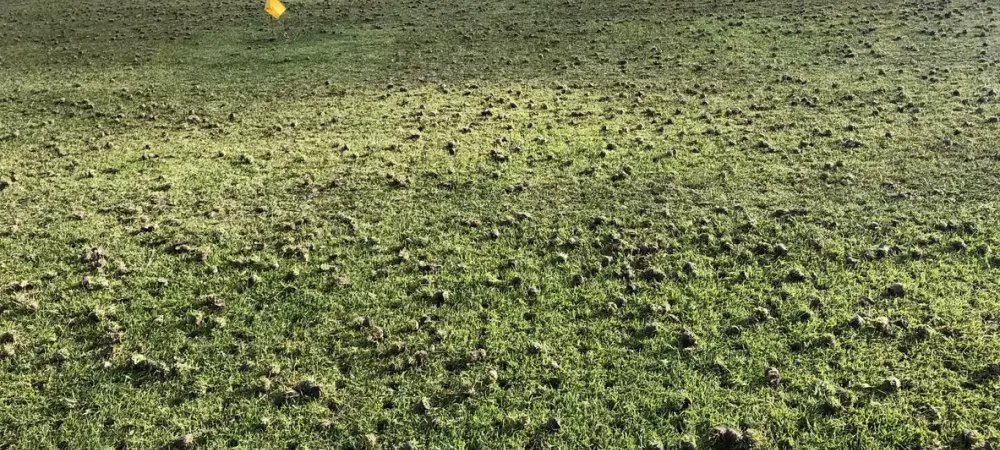
The soil plugs left behind after core aeration usually break down naturally over time and return organic material to the lawn.
Can You Aerate Your Lawn in the Spring?
Spring aeration can still be beneficial, particularly when a lawn is heavily compacted or showing signs that soil conditions are interfering with growth. It may also be an option if fall aeration was missed.
However, spring is generally considered a secondary option for routine aeration on cool-season lawns. Disturbing the soil can create openings where weeds may establish, and the lawn has less time to recover before summer heat and stress arrive.
If spring aeration is necessary, timing it while the grass is actively growing and avoiding overly wet soil can help support better results.
Signs Your Lawn May Need Aeration
Not every lawn needs to be aerated on exactly the same schedule. Soil type, foot traffic, lawn use, and the amount of compaction can all influence how often aeration may be beneficial.
Common signs that a lawn may need aeration include:
- Soil that feels hard or compacted
- Water pooling or running off instead of soaking into the ground
- Thin or weak grass growth
- Bare or heavily worn areas
- Heavy foot traffic across the lawn
- Soil that is difficult to penetrate
- A lawn that dries out quickly despite regular watering
Lawns used frequently by children, pets, or outdoor activities may experience greater soil compaction than areas with very little traffic.
How Often Should You Aerate Your Lawn?
The ideal aeration schedule depends on the condition of the soil and how heavily the lawn is used. Lawns with significant compaction may benefit from more frequent aeration, while lawns with loose, healthy soil may not require it as often.
Properties with clay-heavy soil can also be more prone to compaction. Over time, repeated foot traffic, mowing equipment, and normal lawn use can press soil particles together and reduce available space around the roots.
Rather than aerating simply because a certain amount of time has passed, it can be more helpful to look at the condition of the lawn and soil.
Should You Aerate Before Overseeding?
Aeration and overseeding are often performed together because they address different parts of lawn establishment.
Aeration creates openings in compacted soil, while overseeding introduces new grass seed to help improve thin or bare areas. The holes created during aeration can give some of that seed better access to the soil instead of leaving it entirely on the surface.
When both services are needed, aerating first can help prepare the lawn for overseeding and improve seed-to-soil contact.
How to Prepare Your Lawn for Aeration
A little preparation can help make aeration more effective. The soil should generally contain enough moisture for the aerator to penetrate the ground without being saturated.
Before aeration, homeowners may want to:
- Water dry soil ahead of the service if needed
- Mark irrigation heads or other hidden objects
- Remove toys, furniture, and other items from the lawn
- Mow the grass if recommended
- Avoid aerating soil that is excessively wet
Proper soil conditions make it easier for the equipment to remove cores at an appropriate depth.
What to Do After Lawn Aeration
The lawn may look somewhat messy immediately after core aeration, but the soil plugs should usually be left in place. They will gradually break apart and work back into the lawn.
After aeration, continue watering as needed and avoid unnecessary stress on the grass. If overseeding or fertilization is being completed at the same time, follow the recommended watering and care instructions for those services as well.
Homeowners should also avoid immediately filling in the aeration holes. Allowing them to remain open gives the soil time to benefit from improved airflow and water movement.
Choosing the Right Time to Aerate Your Lawn
For most Pennsylvania lawns, late summer through early fall is the preferred time for aeration because cool-season grasses are actively growing and can recover well after treatment. The combination of cooler temperatures, active root growth, and favorable soil conditions makes fall especially well suited for routine aeration.
Spring aeration can still make sense when compaction is severe, or fall aeration was missed, but it is generally the secondary option. The best timing ultimately depends on the condition of the lawn, the soil, and how actively the grass is growing.