
What Is Crabgrass and How Do You Get Rid of It?
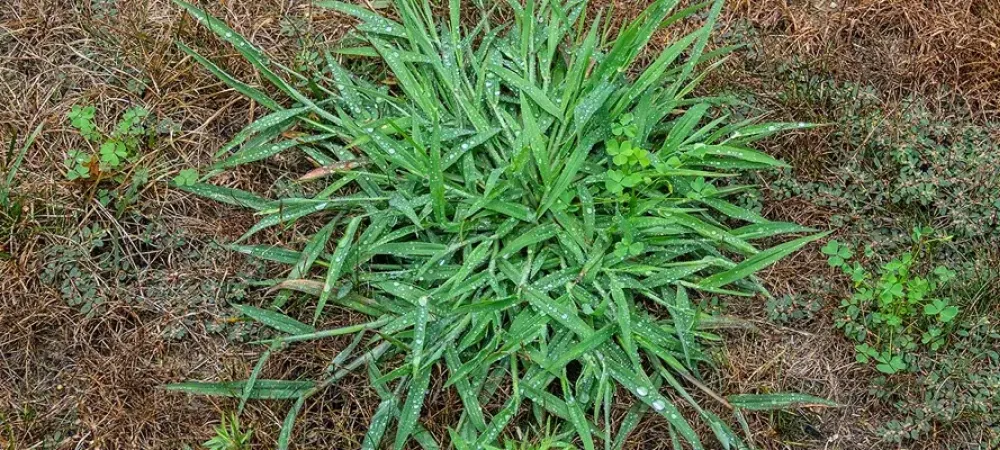
Crabgrass is a fast-growing summer annual weed that commonly appears in thin or stressed areas of Pennsylvania lawns. It germinates from seed in spring, spreads through the summer, and dies after the first hard frost, but not before producing seeds that can lead to another crop the following year.
Smooth crabgrass and large crabgrass are the two most common crabgrass species found in Pennsylvania turf.
Key Facts
Crabgrass is an annual grassy weed, meaning each individual plant lives for only one growing season. The problem continues because established plants produce seeds that remain in the soil and germinate when conditions become favorable again.
The main things to know are:
- Crabgrass usually begins germinating in spring
- It grows most aggressively during warm summer weather
- Thin, sunny areas of turf are especially vulnerable
- Mature plants produce seed from summer into early fall
- Existing plants die after frost, but their seeds can return the following year
- Preventing germination is generally easier than controlling mature plants
Penn State notes that crabgrass can grow in many different soil conditions and is especially prevalent where turf is thin and receives plenty of sunlight.
What Does Crabgrass Look Like?
Crabgrass is a coarse, spreading grass that tends to grow outward from a central point. Its texture and growth pattern usually make it stand out from the finer cool-season grasses commonly found in Pennsylvania lawns.
Common identifying features include:
- Light to medium green grass blades
- A coarse texture
- Stems that spread outward and close to the ground
- A clumping or sprawling appearance
- Seedheads that develop later in the growing season
Crabgrass can sometimes be confused with other grassy weeds, including goosegrass or certain perennial grasses. Looking at the growth habit, blade texture, and time of year can help narrow down the identification.
When Does Crabgrass Grow?
Crabgrass begins germinating in spring and continues emerging into summer, with most growth occurring during warm weather. In Pennsylvania, germination generally begins once soil temperatures near the surface consistently reach about 55 to 58°F for several days.
Timing varies across the state because spring temperatures arrive earlier in southeastern Pennsylvania than in northern or higher-elevation areas.
Once crabgrass emerges, it grows throughout summer and begins producing seedheads from roughly July through September. The plants are eventually killed by frost, completing the annual life cycle.
Why Does Crabgrass Keep Coming Back?
Crabgrass keeps returning because mature plants produce large amounts of seed before they die. Those seeds can remain in the soil and create new plants during future growing seasons.
A recurring crabgrass problem can also indicate that the lawn has areas where desirable turf is struggling. Crabgrass is particularly good at colonizing open space where sunlight can reach the soil.
Common conditions that can make a lawn more vulnerable include:
- Thin or bare turf
- Mowing too short
- Areas with heavy summer stress
- Poor grass establishment
- Lawn edges or other exposed areas
- Spots where desirable grass has died back
Removing visible crabgrass without improving these conditions can leave space for new weeds to take its place.
How Do You Get Rid of Crabgrass?
Crabgrass is managed through a combination of prevention, treatment of existing plants, and lawn care practices that encourage thicker turf. The best approach depends largely on whether the crabgrass has already emerged.
Before Crabgrass Emerges
Pre-emergent control is designed to stop crabgrass seedlings as they begin developing. Timing is especially important because these products need to be in place before or around the beginning of germination.
Penn State describes properly timed pre-emergent herbicides as one of the most effective chemical approaches for controlling crabgrass.
Because spring conditions vary from year to year, treatment timing should be based on local conditions rather than simply using the same calendar date every season.
After Crabgrass Has Appeared
Existing crabgrass requires a post-emergent approach because standard pre-emergent treatments do not eliminate mature plants that are already growing. Younger crabgrass is generally easier to manage than large, established plants.
Small infestations can sometimes be removed by hand, particularly if the entire plant is pulled before it produces seed. Larger infestations may require a selective treatment appropriate for the surrounding turfgrass and the crabgrass's stage of growth.
Does Crabgrass Die in the Winter?
Yes, crabgrass plants die after frost because crabgrass is a summer annual. Brown or dead crabgrass may therefore disappear naturally as temperatures drop, but that does not mean the problem is permanently gone.
The seeds produced during summer and early fall can remain behind and germinate the following spring. That is why waiting for crabgrass to die in winter does little to prevent another infestation.
How Can You Prevent Crabgrass?
Preventing crabgrass involves more than applying a weed-control product. Maintaining dense, healthy turf reduces the open space and sunlight available for crabgrass seedlings to establish.
Helpful lawn-care practices include:
- Maintain an appropriate mowing height: Penn State recommends keeping lawns around 3 inches to help shade young crabgrass seedlings.
- Avoid scalping the lawn: Very short grass exposes more soil to sunlight and creates opportunities for weeds
- Improve thin areas: Reseeding or addressing underlying lawn problems can reduce open space
- Water appropriately: Keeping desirable turf healthy helps it compete with weeds
- Fertilize according to lawn needs: Healthy turf is better able to maintain density
- Use pre-emergent control at the proper time: Preventing crabgrass before it establishes can reduce summer infestations
Can a Lawn Become Crabgrass-Free?
Crabgrass populations can be greatly reduced, but long-term control usually requires more than treating the weeds that are visible today. Seeds already present in the soil and new seeds introduced over time mean prevention needs to be an ongoing part of lawn care.
The most effective strategy is to combine correctly timed weed control with practices that keep the lawn dense and limit the thin, open areas where crabgrass thrives. Over time, reducing seed production and improving turf density can make recurring crabgrass infestations much easier to manage.