
What Causes Lawn Fungus
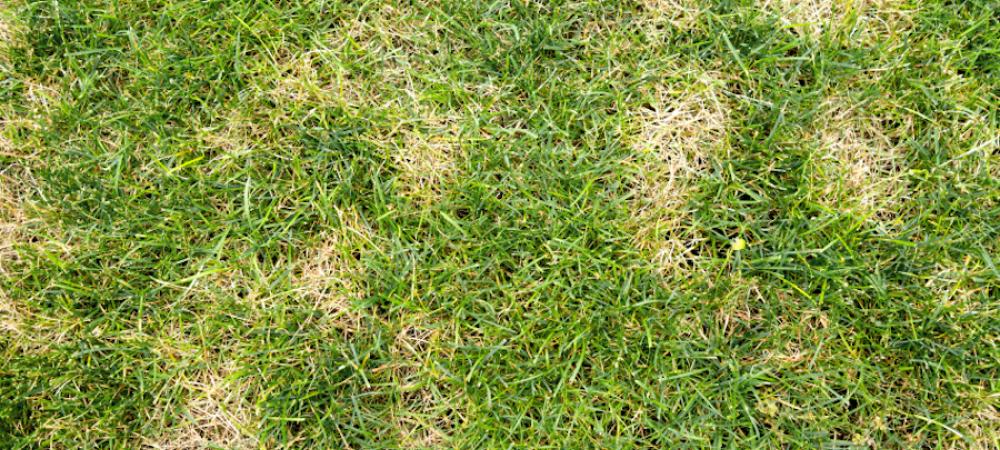
Lawn fungus develops when disease-causing fungi become active under favorable conditions, often involving prolonged moisture, humidity, stressed turf, or certain temperature ranges. Different lawn diseases thrive under different conditions, which means identifying the symptoms and understanding what was happening in the lawn when they appeared are both important.
What You Should Know
Lawn fungus is not one single disease. It is a broad term used for several fungal diseases that can affect grass blades, crowns, or roots.
Common warning signs include:
- Circular or irregular patches of discolored grass
- Yellow, tan, brown, or reddish areas
- Spots or lesions on individual grass blades
- White or gray fungal growth
- Red or pink thread-like material
- Patches that continue expanding despite normal watering
Brown patch, dollar spot, red thread, powdery mildew, fairy ring, and gray leaf spot are among the fungal diseases that can affect turfgrass.
What Causes Lawn Fungus?
Lawn fungus usually develops when moisture, temperature, and turf conditions create an environment that favors disease. The exact combination varies depending on the fungus.
Several factors can increase the likelihood of disease:
- Prolonged leaf moisture
- Frequent rainfall or high humidity
- Watering too often
- Watering late enough that grass stays wet overnight
- Poor airflow
- Excessive thatch
- Improper fertilization
- Stressed or weakened turf
Some diseases are associated with too little nitrogen, while others can become worse when excessive nitrogen produces rapid, tender growth. That is why simply fertilizing a diseased lawn is not always the right response.
What Does Lawn Fungus Look Like?
Lawn fungus can look like patches, rings, spots, discoloration, or unusual growth on grass blades. The exact appearance depends on the disease involved.
Look closely for differences in:
- Color: Brown, yellow, tan, red, pink, gray, or white
- Shape: Circular patches, irregular areas, rings, or small spots
- Size: Anything from a few inches to several feet
- Grass blades: Lesions, discoloration, or fungal material
- Timing: Spring, summer, fall, or after prolonged wet weather
Examining individual blades can sometimes reveal more than looking at the lawn from a distance.
Common Lawn Fungal Diseases in Pennsylvania
Pennsylvania lawns can experience several different fungal diseases throughout the growing season. Some become active during cool, wet weather, while others are more common during warm, humid periods.
Red Thread
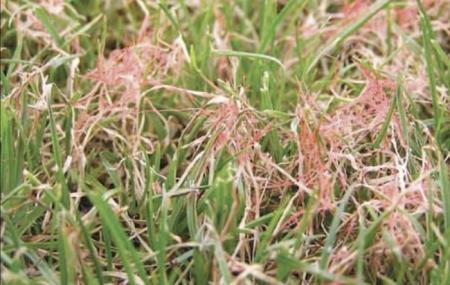
Red thread causes irregular or circular patches with a reddish or pink appearance and is especially common during rainy periods in late spring and early summer. Penn State describes it as one of the most common lawn diseases in Pennsylvania during those conditions.
The disease gets its name from the red or pink thread-like fungal growth that can appear on affected grass blades. It commonly affects perennial ryegrass, fine fescue, and Kentucky bluegrass.
Brown Patch
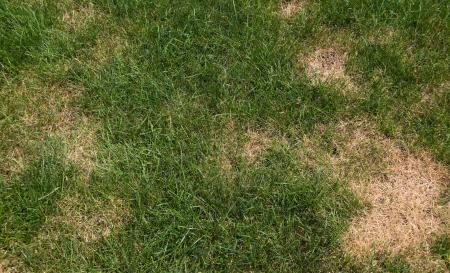
Brown patch causes light-brown circular patches that may range from a few inches to several feet across. It is most likely to develop during extended periods of high heat and humidity and commonly affects tall fescue and perennial ryegrass.
In early morning conditions, white fungal growth may sometimes be visible on or between grass blades within affected patches.
Dollar Spot
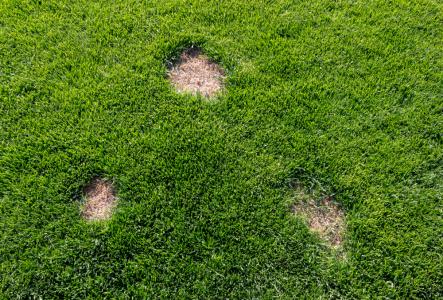
Dollar spot typically creates small tan or brown areas that can eventually merge into larger damaged sections. On home lawns, individual patches may be several inches across.
The disease is most active during humid weather and can occur throughout summer in Pennsylvania, often becoming particularly noticeable in late summer. Individual grass blades may develop tan lesions with reddish-brown borders.
Can Overwatering Cause Lawn Fungus?
Overwatering can contribute to lawn fungus when it keeps grass blades and soil excessively wet for long periods. Fungal diseases often benefit from prolonged moisture, particularly when turf remains wet overnight.
The goal is not to keep a lawn constantly damp. In general, deeper and less frequent watering encourages stronger roots while allowing the grass surface to dry between irrigation cycles.
Watering earlier in the day also gives grass more time to dry before nighttime.
Can Too Much Fertilizer Cause Fungus?
Excess fertilizer can increase the risk of certain lawn diseases by encouraging rapid, tender growth. However, some diseases are more severe when turf is under-fertilized, so the relationship between nutrients and lawn fungus is not always straightforward.
Fertilization should therefore be based on the needs of the lawn rather than used as an automatic response to discoloration.
Is Brown Grass Always Lawn Fungus?
Brown grass is not always caused by fungus. Drought, grub damage, pet urine, mowing problems, fertilizer burn, and compacted soil can all produce discoloration that resembles lawn disease.
Before assuming fungus is the problem, consider:
- Whether the soil is unusually wet or dry
- Whether affected grass pulls up easily
- Whether damage followed mowing or fertilization
- Whether patches have distinct rings or unusual blade markings
- Whether fungal growth is visible in the morning
- Whether the damage continues spreading
Correct identification is important because adding water to drought-stressed turf may help, while adding more water to certain fungal problems may make conditions worse.
How Do You Prevent Lawn Fungus?
Preventing lawn fungus starts with reducing prolonged moisture and keeping turf healthy enough to tolerate disease pressure. Proper cultural practices can lower the likelihood of many fungal problems.
Helpful steps include:
- Water early in the day
- Avoid frequent, shallow irrigation
- Maintain the appropriate mowing height
- Keep mower blades sharp
- Avoid excessive fertilizer
- Address excessive thatch
- Improve drainage where water regularly collects
- Aerate compacted soil when needed
- Avoid leaving grass wet for extended periods
Penn State notes that many lawn fungal problems can be prevented or reduced through proper lawn maintenance and care.
Does Lawn Fungus Go Away on Its Own?
Some lawn fungal diseases can improve when weather conditions change, and the grass resumes healthy growth. Others may continue damaging turf if the conditions favoring the disease remain in place.
Red thread, for example, often allows affected turf to recover within several weeks once growth improves, and fungicide treatment is not necessary in most cases.
The best response depends on the disease, severity, grass species, and growing conditions. Identifying the problem before treating it helps avoid unnecessary applications and allows lawn-care practices to be adjusted where needed.